Aerobic Treatment Systems & Alternative Septic Systems
When shallow caliche, a small lot, or high groundwater rules out a conventional system, an aerobic or alternative design is often the only permittable path forward.
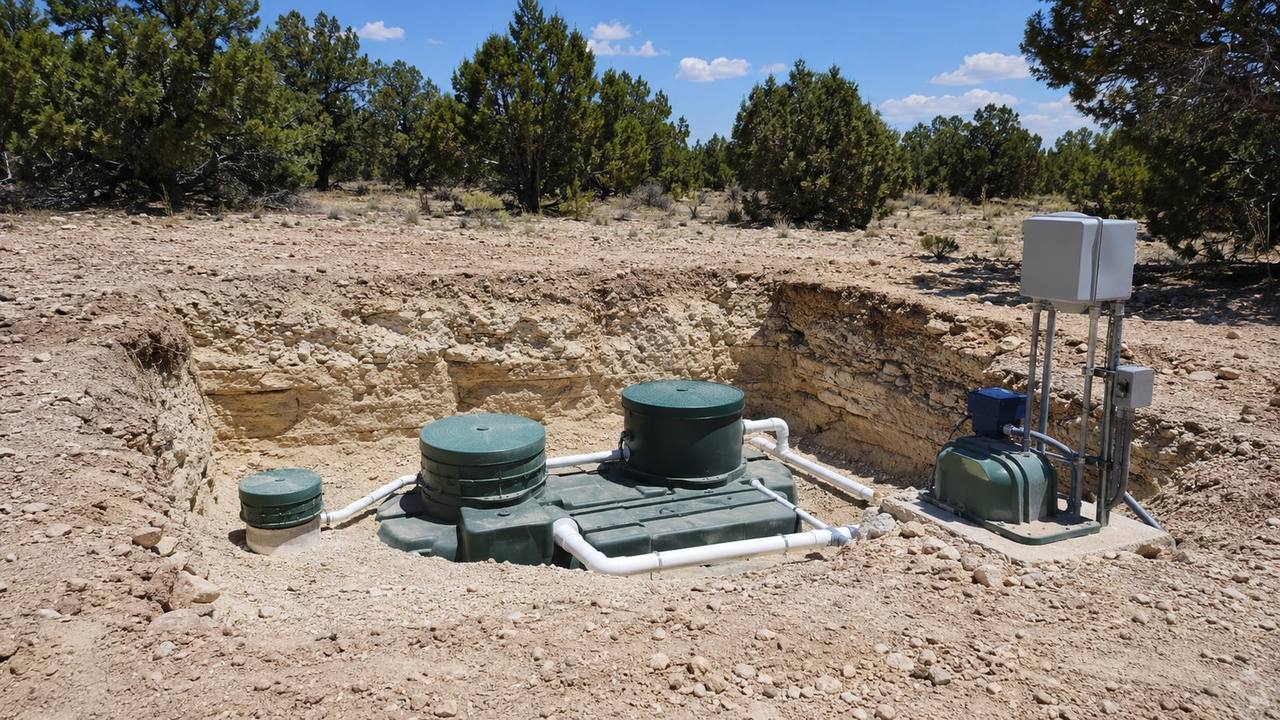
Not every lot in the Albuquerque metro can support a standard gravity-fed tank-and-drainfield system. Shallow caliche shelves in the East Mountains and Placitas, small lots that can't fit a full-size conventional drainfield, and properties with high groundwater near the Rio Grande in Corrales or the South Valley are all common reasons a soil evaluation points toward an alternative system instead.
What an aerobic treatment unit does differently
A conventional septic tank relies on anaerobic (oxygen-free) digestion and lets the soil finish treatment. An aerobic treatment unit (ATU) actively introduces oxygen to break down waste more thoroughly before it ever reaches the drainfield, producing cleaner effluent. That extra treatment step is what allows an ATU-based system to work on sites where a conventional drainfield wouldn't meet setback or soil requirements — often with a smaller absorption footprint, such as a drip distribution field.
- Aerobic treatment units (ATUs) — mechanical aeration for higher-quality effluent
- Drip distribution fields — spread effluent through shallow tubing across a smaller footprint
- Sand filter or media filter systems — an engineered layer replacing natural soil filtration
- Mound systems — raised drainfields for sites with high groundwater or shallow soil
The trade-off: more moving parts, more maintenance
Alternative systems cost more upfront than conventional systems and typically require an ongoing maintenance contract — most have mechanical components (blowers, pumps, control panels) that need periodic professional service to keep performing and stay in compliance. That's a real ongoing cost to budget for, not just a one-time installation expense.
New Mexico only permits liquid waste treatment products that have been reviewed and approved by the Wastewater Technical Advisory Committee (WTAC). A licensed installer will only spec approved equipment — it's worth confirming this if you're ever quoted an unfamiliar system type.
Find out if you need an alternative system
If your lot has known caliche, high groundwater, or tight space constraints, tell us and we'll connect you with an installer experienced in alternative designs.
- Common on East Mountains and Placitas lots
- Handles both new installs and upgrades from failed conventional systems
- Only works with WTAC-approved equipment
Request received
Thanks — we've got your details and will be in touch shortly to connect you with a local septic professional.
Frequently Asked Questions
You won't know for certain until a percolation test and site evaluation are complete, but shallow soil to bedrock, a lot under roughly half an acre, or known high groundwater in your area are all early indicators worth mentioning to your installer up front.
Most jurisdictions require ongoing service on ATUs and other mechanical systems as a condition of the permit, since they rely on components that can fail — unlike a conventional system's passive design.
Yes, through the same permitting authority (NMED or your county), but proprietary drainfield products and treatment units must specifically be on New Mexico's approved products list before they can be permitted.
Get your tough lot evaluated
Tell us about your property's constraints and we'll connect you with an installer who works with alternative systems regularly.
Get a Free Quote