What Does a Septic System Cost in the Albuquerque Metro?
Septic pricing depends on your soil, your lot, and your system type far more than it depends on the installer you choose. Here's what typically drives the number.
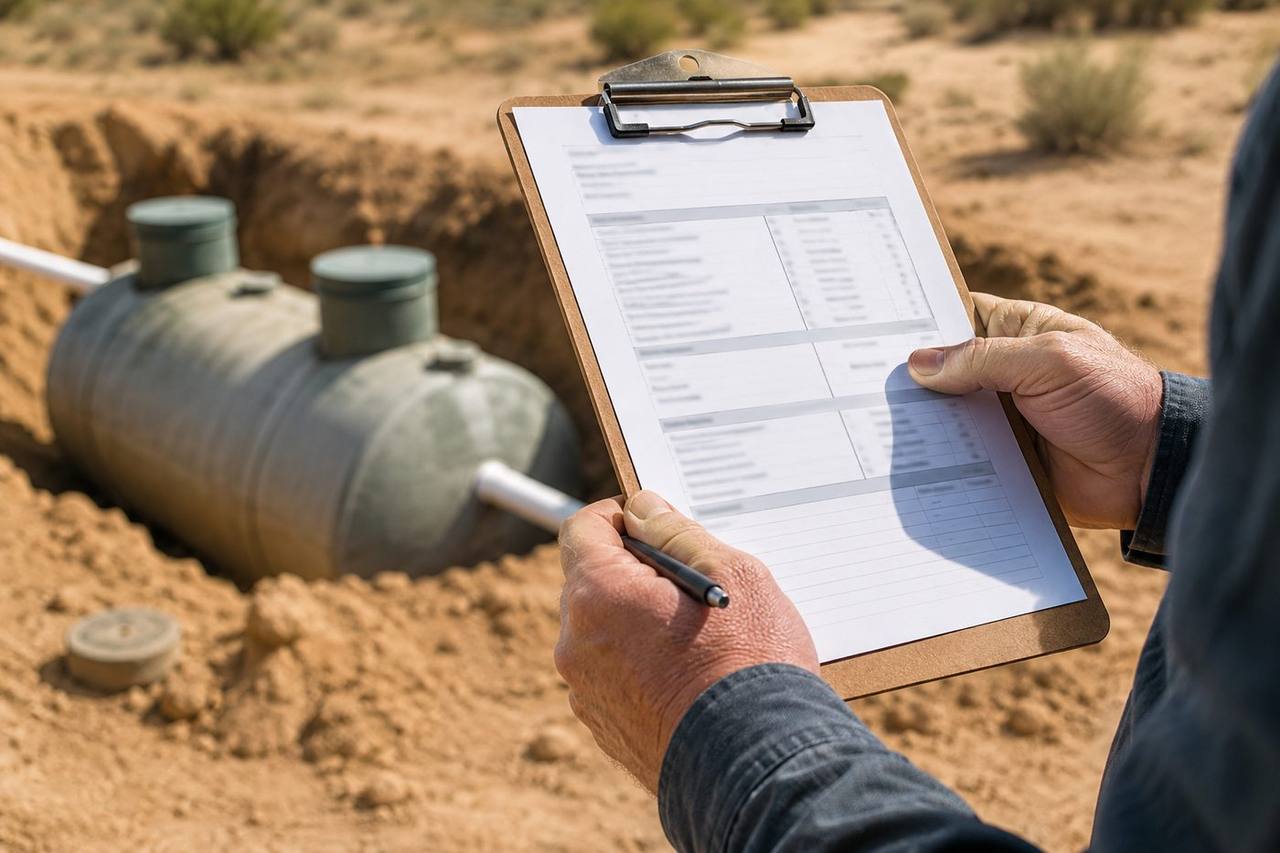
There's no single honest answer to "what does a septic system cost" — the real answer depends on your soil, your lot size, whether you need a conventional or alternative system, and how far the drainfield sits from the tank. What follows are typical ranges seen across the region, based on the same variables every installer has to account for. Treat these as planning numbers, not a quote — your actual price comes from a site evaluation.
| Project | Typical Range | What drives the price |
|---|---|---|
| Conventional tank & drainfield (new) | $4,000–$12,000+ | Tank size, trench length, soil conditions, site access |
| Drainfield-only replacement | $5,000–$12,000 | Trench length, gravel volume, soil percolation rate |
| Aerobic / alternative system | $10,000–$20,000+ | Mechanical components, ongoing maintenance contract |
| Percolation / soil test | $700–$2,000 | Number of test holes, hand-dug vs. machine-dug, lot size |
Ranges reflect typical regional pricing for comparable projects and are not a quote. Caliche and hard clay layers common across the metro can add excavation time and cost beyond soft-soil estimates.
Why the same project can cost twice as much a mile away
The single biggest local cost variable is what's actually in the ground. Caliche — a hard, cemented layer of calcium carbonate common across much of the metro's mesas and foothills — can turn a one-day excavation into a multi-day job requiring a rock hammer attachment or a larger excavator. Two lots that look identical on the surface can have very different caliche depths, which is exactly why a firm quote before a site evaluation isn't a real quote.
Other factors that move the price
- Tank material and size (concrete vs. plastic, and gallons required for your bedroom count)
- Distance and elevation change between the house, tank, and drainfield
- Site access for excavation equipment — tight urban lots cost more to maneuver on than open acreage
- Whether an engineered design (aerobic unit, mound system, drip field) is required
- Permit fees, which vary by jurisdiction (NMED vs. county)
- Removal and decommissioning costs if you're replacing an existing failed system
Want to understand what determines conventional vs. alternative system pricing on your lot specifically? Read the percolation test & soil guide.
Get a real number for your property
Site evaluations are the only way to get accurate pricing. Tell us about your project and we'll connect you with a local installer.
- No cost estimate without seeing the site — and we tell you that upfront
- Serves both new construction and replacement projects
- Connects you with installers across the full metro area
Request received
Thanks — we've got your details and will be in touch shortly to connect you with a local septic professional.
Frequently Asked Questions
It can be, especially if it was given without a site visit. A quote based on assumed soft soil that turns out to be caliche can mean expensive change orders once excavation starts.
Some installers offer financing directly, and it's worth asking about when you get connected with one. This is a decision between you and the contractor, not something we arrange.
This varies by installer — some build permit fees into their total price, others list them separately. Ask for a clear breakdown before signing anything.
Get a real evaluation, not a guess
Tell us about your property and timeline and we'll connect you with an installer who can give you an accurate number.
Get a Free Quote