Percolation Tests & New Mexico Soil, Explained
Your septic design lives or dies on one number: how fast water moves through your soil. In the Albuquerque metro, that number changes fast across short distances.
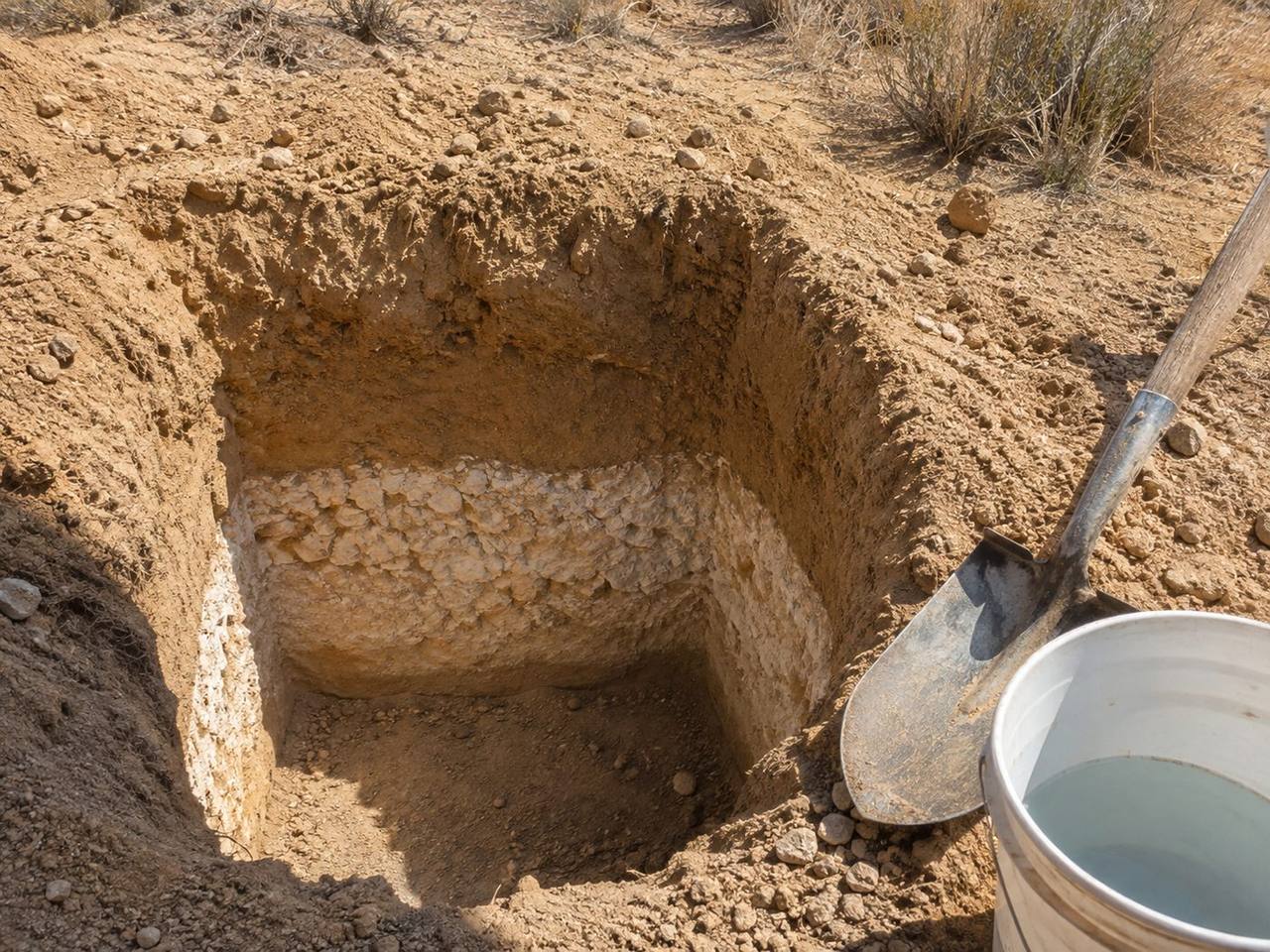
A percolation test, or "perc test," measures how quickly water drains through the soil at your proposed drainfield location. The result — typically expressed as minutes per inch of drop — determines whether your lot supports a conventional gravity-fed drainfield, needs a larger one, or requires an engineered alternative system entirely.
Why this matters more here than in a lot of places
New Mexico's terrain runs from river-bottom sand to volcanic mesa to mountain foothill within a short drive, and the Albuquerque metro sits right in the middle of that variation. Caliche — a hardened layer of calcium carbonate that can range from a thin crust to several feet of cemented material — sits under large sections of the East Mountains, Rio Rancho's mesa-top areas, and Placitas foothills. It drains poorly and, when thick, is genuinely difficult to excavate through.
A typical test hole in this region can show three or four distinct layers: loose sandy or clay topsoil, a transitional layer, a caliche band of variable thickness, and sometimes clay or bedrock beneath that. Which layers you hit, and how deep, changes the whole design.
What the test actually involves
- One or more test holes dug at the proposed drainfield location, by hand or machine depending on depth needed
- Holes are pre-soaked, then filled with water and timed as the water level drops
- A soil profile is often recorded alongside the perc rate, noting each layer's depth and texture
- Results and a report are submitted as part of your septic design and permit application
What happens if your soil fails the test
A slow or failed perc result doesn't mean you can't build — it means your system needs to work differently. Options include an engineered drainfield with a larger absorption area, a raised mound system, or an aerobic treatment unit that pre-treats effluent before it reaches the soil, reducing how much filtering the ground itself has to do.
Caliche depth and thickness is also the single biggest driver of installation cost in this market — see the cost guide for how that plays out in real numbers.
Get your soil tested
Tell us about your property and we'll connect you with a licensed liquid waste professional who can perform your perc test and site evaluation.
- Experienced with caliche, clay, and mixed-soil sites across the metro
- Test results feed directly into your permit application
- Honest read on whether you'll need an alternative system
Request received
Thanks — we've got your details and will be in touch shortly to connect you with a local septic professional.
Related pages
Frequently Asked Questions
Results used for a permit application need to come from a licensed liquid waste professional or approved installer specialist — a DIY test won't be accepted for permitting purposes, even if it's informative for your own planning.
It varies enormously by specific location, from a thin surface crust to several feet of cemented material. There's no substitute for testing your actual lot.
Not always — sometimes a larger conventional drainfield or a mound system is enough. An aerobic unit is one option among several, and your site evaluation will point to the most cost-effective one that still meets code.
Find out what's actually under your lot
Get connected with a licensed professional who can test your soil and tell you what it means for your project.
Get a Free Quote